28 September 2011

Better Testing Needed for Critical Vitamin


Many people go to their doctor these days and ask about B12 shots. Most providers react with shock and grudgingly order a Serum B12 test because you must never give this important vitamin to any one who does not need it.  Usually this is faulty logic because the only true way to measure active B12 in the body is with an intracellular B12 level.


Now comes a great article looking at the way we currently look at B12 in mainstream medicine.  I guess a water soluble vitamin is really dangerous to their thinking.  But don't back off because B12 can really protect your health and that of your brain as you age.  Remember too that in the 40s and 50s it was common to give B12 and natural thyroid to people as they aged.  Then we had little dementia, comparatively speaking.


By Amanda Gardner, HealthDay News

MONDAY, Sept. 26 (HealthDay News) — Too little vitamin B-12 may be associated with smaller brain size and more problems with thinking skills as people age, new research suggests.
And the number of people who suffer from B-12 deficienciesmay be greater than thought because current methods for measuring levels of the vitamin may not be accurate, said Christine C. Tangney, lead author of the study published in the Sept. 27 issue of Neurology. The study was funded by the U.S. National Institute on Aging.
The researchers assessed the study participants' vitamin levels not only from B-12 levels themselves, but from blood metabolites that are considered markers of B-12 activity (or lack of it) in the tissues.
But the findings aren't nearly enough to start recommending people take B-12 supplements to jumpstart their brains, cautioned Dr. Marc L. Gordon, chief of neurology of Zucker Hillside Hospital in Glen Oaks, N.Y. Gordon was not involved with the study.
"It's not clear exactly if you have a measurement like this whether it's causal or that lowering the marker will drive a change in the risk," he said.
And unless you're a strict vegan, most people do get enough B-12, which is critical for brain health, from their diet — mainly from animal-derived products, added Gordon, who is also anAlzheimer's researcher at The Feinstein Institute for Medical Research in Manhasset, N.Y.
B-12 is critical for brain health but can become an issue as people get older because the body becomes less able to absorb it. Also, certain drugs can affect absorption. These include proton pump inhibitors, widely used to reduce stomach acid, and the hugely popular diabetes drug metformin (Glucophage).
The authors of the new study looked not only at B-12 levels but at five different blood markers for the vitamin that indicate "where B-12 is active in the tissues," said Tangney, who is associate professor in the department of clinical nutrition at Rush University Medical Center in Chicago.
These markers may actually be better indicators of how much B-12 is absorbed in the body than B-12 itself, she added.
In this study of 121 black and white seniors participating in the Chicago Health and Aging Project, volunteers had their blood drawn and tested for B-12 and related metabolites; they also took 17 tests to measure their memory and mental acuity (cognitive skills).
About 4.5 years later, the researchers measured the participants' brain volumes using MRI scans, and checked for other signs of brain damage. High levels of four of the five markers were linked with smaller brain volume and/or lower scores on cognitive tests, compared with people who had lower levels of the markers.
"This suggests that measuring B-12 levels in itself is not enough to tell if a person is deficient or not," Tangney said. "We need to be careful and think about other indicators."
If a person's B-12 levels are borderline normal, it might be reasonable to check other measures, said Gordon.
Tangney said the study results suggest that B-12 deficiencies contribute to brain atrophy (shrinkage), which in turn can contribute to cognitive problems. However, she also warned against making dietary changes or drawing too-firm conclusions from these findings, noting that they were based on data from only a small number of people.
Last Updated: 09/27/2011

Selections from Natural Health News

Jun 24, 2008
I am a proponent of B vitamins, and especially B12 for various health reasons. And I am a hold out for B12 shots even though in today's cookie cutter approach to health care it is almost taboo to even ask for B12 shots from your health ...

Sep 15, 2008
Dementia and Vitamin B12. Vitamin B12 deficiency is well recognized as a cause of cognitive decline and dementia.4 Dementia due to vitamin B12 deficiency responds to vitamin B12 therapy, unless it has progressed to the ...
Oct 19, 2010
With his open-minded MD he was able to switch to B12 shots and natural thyroid support, reduce his costs, and greatly improve his anemia, and his health. Working as I do from time to time with people who experience serious ...
Dec 11, 2008
Even B12 shots were a regular occurrence and no one needed a blood test to decide if you could get them. Of course now the blood test used - really to get a billable charge and avoid acting outside standards of care - is ...

The Chicago Plan

This just in from ANH, imagine, forced to take drugs to keep your job.  Not my idea of wellness.
If employed by Chicago, you’ll take whatever “preventive” medicine the city demands—or pay far more in insurance premiums!Under Mayor Rahm Emanuel’s plan, unveiled last week, city employees must enroll in a conventional medicine–structured “wellness program” to manage chronic health problems such as obesity, diabetes, and high blood pressure. Employees who do not participate in the program will be required to pay an extra $50 per month in insurance premiums for each family member covered.The Chicago program includes “enhanced screening and wellness training to establish benchmarks and long-term goals, including weight loss, medication, exercise, and kicking the smoking habit.” A form of this plan appears in the healthcare reform act as well—which should be no surprise, as Rahm Emanuel was one of its chief architects.So imagine this picture. Conventional medical doctors tell you to take your blood pressure medication, whether you think it wise or not, whether you want to try natural alternatives or not. And if you don’t, you pay. Same for taking statins for high cholesterol, medications which many medical professionals agree are really dangerous to your health.Preventive medicine is a hotly debated topic, as it should be. But for Rahm Emmanuel, it’s one-size-fits-all. You had better have your blood sugar at a specified level, or you will be required to take highly dangerous diabetes drugs. At least they won’t fire you or put you in jail if you don’t comply—it will just cost you money. So far.This kind of incipient medical fascism is mainly a gift to Big Pharma, and we can be sure that Big Pharma is cheering Emmanuel on.

More Drugs Making You Sick

Fluoride based antibiotics are well known to cause problems in your gastrointestinal system.  More damage can come from fluoride based drugs like CIPRO and others that are based in fluoride compounds.
Consider this evidence - and why probiotics are critical if you are prescribed these drugs.
Antibiotic use tied to Crohn's, ulcerative colitis

Selections from Natural Health News
Dec 09, 2008
Ever Consider Herbal Help for IBS, Crohn's or Celiac Concerns? The root contains starch (37%), mucilage (11%), pectin (11%), flavonoids, phenolic acids, sucrose, and asparagine. I was reading two articles this morning ...
Nov 15, 2008
Fibre, antispasmodics and peppermint oil are used to treat IBS, but evidence of their effectiveness is unclear because of conflicting results from studies, the researchers said. They have also been overlooked because of ...
Apr 23, 2008
"Peppermint oil, which is extracted from the stem, leaves, and flowers of the plant, has become popular as a treatment for a variety of conditions, including irritable bowel syndrome (IBS), headache, and non-ulcer dyspepsia." ...
Jun 10, 2006
... for such conditions as Chrohn's dis-ease, or the new one that came out just after Novartis developed a drug for it (along with a very distasteful ad that is demeaning to women), IBS or 'irritable bowel syndrome'. ...

Thimerisol Dangers Identified


I urge you to read this and pass on to all of your friends -

A Review of ‘Scientific Information Regarding the Use of Thimerosal As a Preservative in Vaccines’
http://dr-king.com/docs/110915_PGKReviewOfUSSubmissionToUNEP_b.pdf


26 September 2011

Recipe: Savory Sausage and Eggplant Casserole


I cannot deny fall any longer. School has been up and running for 3 weeks already, the carnivals and harvest festivals are everywhere. And in one week buildings around the city will legally have to turn on the heat if the overnight temperatures fall below 55 degrees. (Or something like that.)

Yet saying goodbye to summer has been bitter this year. Perhaps it was the killer tan I had this year during the days when I actually got sun. Perhaps it was the time off from work. Perhaps it was because my DH was home for several weeks this summer playing with the kiddos and helping out around the house. Our schedule was leisurely, our fridge was full of fresh fruit and although it was wickedly hot much of the time the sun felt clean and clear on our skin. Now here I am sorting through my closet, up to my ankles in corduroy and opaque Spanx, and I can't find any excitement about it at all.

This time of year DH is always playing Simon and Garfunkel and reminding me how they conjure fall for him. His memories of all-boys Catholic prep school will forever endear him to the fall season. Starting school gave his life structure and meaning. I normally find excitement this time of year in pull on boots, corduroy skirts with over sized belts or sweaters that hit just below the waistline. Oh! And brightly colored cardigans. But this year. I just keep looking at my sun dresses and white pants with melancholy.

Eggplants and tomatoes are the fruits of a dying season. Nurtured by long hot days they seem to come of age just as the days begin to shorten. While tomatoes are coaxed into being for much longer seasons by farmers who know that the tomato is a cash cow, eggplants are free to do their own thing. Not every person you know will eat an eggplant this season. And my family and I might only have 2 or 3 in any given late summer. But they are some of my most favorite of all vegetables.

Eggplants cook down into a mush that is not sweet and not bitter, but yet a bit of both. They are also usually cooked in so much olive oil that this fatty and creamy texture is cooked right into the vegetable pulp. The following recipe is not one that will be kind to your waistline. It is quite the fattening dish. But it is one that will help to coax out some of those tears that you have been unable to shed over summer's demise.


Sausage and Eggplant Casserole
FOR THE SAUCE:
1 pound sausage (preferably pork, but that isn't entirely necessary, definitely ethically raised though)
1 peeled and cubed eggplant, about 3-4 cups (any variety)
1 medium sized onion, chopped to a medium dice
2-3 cups prepared tomato sauce
1/2 cup finely chopped kale (in a chiffonade if you will)

FOR THE POLENTA:
5 cups water
1 teaspoon salt
2 cups dry polenta
1 cup heavy cream

FOR THE TOPPING:
Fresh mozzarella and Parmesan cheeses

In a larger skillet than you think you need (that has a lid), begin to cook your sausage. When the sausage is cooked through but not yet brown, add your onion and eggplant and stir. Cover and cook until the eggplant begins to soften, maybe 30-40 minutes. At first the eggplant will soak up all the fat in the pan. But as it cooks it will release it all back into the dish. Notice I didn't say drain the fat from your sausage? Well, that is why this recipe is so good. The fat is crucial to the flavor of this meal. If your sausage is very lean like turkey sausage, add about a quarter cup of olive oil during browning. This oil will prevent burning, don't remove any of it.

When the eggplant becomes very soft add the prepared tomato sauce and the chiffonaded kale. The reason for the stipulation on the kale is that while you want to add some more vitamins to this dish, you don't want it to be thick and chewy. The idea is that the kale will melt into the sauce. You can completely omit it if you prefer. Allow the sauce to cook for another 45 minutes to an hour until all the flavors have combined.

In another pot, bring your 5 cups of water up to a boil with the teaspoon of salt. When the water is at a rolling boil, add your polenta while whisking to avoid clumps. Allow polenta to cook. I recently saw on TV that polenta that is fully cooked naturally pulls away from the pan when stirred. It reminded me of when bread dough comes together. I added my cup of cream when this happened. It is worth it to note however, your polenta will likely not look like bread dough coming together. It just won't be quite so amorphous and sticky. It will get very thick when fully cooked. Undercooked polenta is NOT delicious.

Pour your cooked but still hot polenta into a casserole dish. Spread evenly over the bottom. Do not wait for your polenta to cool before you put it in the casserole dish. Cooled polenta will take on whatever shape it was in while cooling. You MUST get it into your casserole dish while it is still warm. Layer your sauce on top of the polenta, and also spread in an even layer. Lastly top with cubed or sliced fresh mozzarella cheese and grated Parmesan.

Bake the casserole in a 350 degree oven until the cheese has become melted and yummy looking on top.


Serve, and try not to eat the whole freakin' pan. It will be hard. But you can do it. Think of the amazing lunches and leftovers you will have!!! And yes, you are reading correctly, this recipe takes apx 2 hours to cook. It is definitely a weekend effort. But it does freeze beautifully. Even better, make a double batch and eat one and freeze one!

The Things did NOT eat this meal. Neither one said they liked sauce that night. Go figure. They are difficult to understand and even more difficult to anticipate. Oh well, more for me!

Enjoy!!

This post is shared with Melt in Your Mouth Mondays and Traditional Tuesdays and Real Food Wednesdays and Simple Lives Thursdays

Diabetes and Wound Care

Maggots used in wound care dates back hundreds if not thousands of years.

Creepy-crawlies may help heal diabetes wounds

(Reuters Health) - Researchers from Hawaii have a suggestion for how to jump-start the healing of difficult diabetic wounds: let maggots do the work.
To allow such wounds to heal, doctors remove infected or dead tissue with scalpels or enzymes, a process they call debridement.
But these tools often fail, said Dr. Lawrence Eron from Kaiser Hospital and the University of Hawaii in Honolulu.
"These problem patients with diabetes really need better treatments in order to salvage their limbs," he told Reuters Health.
"Maggot debridement treatment is overwhelmingly effective," he added. "After just one treatment these wounds start looking better."
He and his colleagues presented their findings this week in Chicago at a scientific meeting, and they still haven't been vetted by independent researchers.
Eron's team treated 37 diabetics with maggots. The patients all suffered from a type of artery disease that causes poor circulation in the limbs, and they all had stubborn wounds -- some up to five years old.
The doctors put 50 to 100 maggots (of the species Lucilia sericata) on the wounds and left them there for two days, at which time they applied new ones. They repeated this five times on average.
"We cage the maggots in a mesh-like material. Nylon panty hose might be used. And then we seal them so they don't get out," Eron explained.
Twenty-one patients had successful outcomes, defined as eradication of infection, complete removal of dead tissue, formation of robust connective tissue in the wound and more than three-quarters closure of the wound.
The treatment failed in a handful of patients. One had excessive inflammation surrounding the wound, two bled too much, and three had problems with infected bones.
Five wounds were infected with the antibiotic-mocking "superbug" MRSA, but they healed successfully with the maggot therapy. Nine wounds were infected with another bacterium called MSSA, and six of those healed up. All 10 cases with infection due to group B streptococci were successfully treated, Eron said.
Asked how he persuades patients to undergo the creepy-crawly treatment, Eron said he carefully explains the procedure and then has them sign a consent form.
"A lot of patients might be somewhat wary of having live insects placed into their wounds so we explain how it works and what possible problems might occur," he said.
Maggots secrete substances into the wounds that liquefy dead tissue and then they ingest the material to further degrade it in their gut. The wounds are cleaned, and other substances contained in the maggot secretions allow the development of granulation tissue, a type of connective tissue that forms during wound healing.
"After this, we go on to do further treatment with hydrogels, grafts of cell culture tissue, or negative pressure dressings," said Eron. "But to get to this point where these techniques will work, you really need to clean up the wound, get rid of dead tissue, and get robust granulation tissue into the wound. And this is where the maggots help."

Honey is also a great healer for wounds in people with diabetes.  Essential oils help especially when there is great infection. http://www.leaflady.org/honey.htm

A Massage Technique - U.S. physician, Dr. J. B. Dawson, has discovered a simple massaging technique that can restore blood flow to skin ulcers and speed the healing process. Skin ulcerations develop in a circular pattern that resembles a three-layered bull's eye. At the center of the circle is a red, inflamed area where tissue destruction has taken place. Just around the outside of that red center, you'll usually find an area of pus formation. This area is surrounded by a rim of swollen tissue, which forms the outer boundary. To promote healing in the ulcer, Dr. Dawson gently and carefully massages the red center of the ulceration in a circular manner once a day. To block the pain of the massage, he uses a mixture of 2 percent lidocaine and an antibacterial ointment. This gentle method of massage increases circulation to the infected area. After a few days, Dr. Dawson begins to massage the area more firmly and gradually expands the massage to include the outer rim of the circle. Within a few days, if the pain caused by massaging the ulceration starts to subside, there is no longer any need to use the lidocaine and the ointment. When the infection begins to clear, you can substitute vegetable (olive oil) oil for the antibiotic ointment. As treatment continues, the increase in circulation slowly destroys the outer rim of the ulcer. The destruction of the border appears to be the key to healing diabetic lesions. Dr. Dawson reports that, with his technique, ulcers as large as 3 centimeters (a little over an inch) heal completely in one to two weeks. He has found that they heal even better if they are left exposed to the air with a thin covering of lubrication. If you can't find lidocaine, Solarcaine (the sunburn ointment containing lidocaine) should work just as well. Dr. Dawson mixes an over-the-counter antibacterial ointment with the lidocaine.          

from our main domain, http://www.leaflady.org/Diabetic_Health.htm

Selections from Natural Health News

Mar 20, 2009
The theory has been that maggots are effective because they "clean out" dead tissue - a process called debridement - stimulating healing and getting rid of bugs such as MRSA in the process. But although larval therapy is being used more ...
Aug 29, 2006
The Pain Truth: How and Why We Hurt, Chronic Pain Shrinks People's Brains, Discovery Offers Hope to Chronic Pain Sufferers, Maggots and Leeches: Old Medicine is New Original Story: Ancient Minty Painkiller Worked, Modern Study Suggests ...

25 September 2011

Plant Communities

A native plant by itself is not a native plant; it is “a plant”.  Native plants live in natural communities that are defined by their location aspects such as elevation, landforms, moisture level, geological characteristics, soils and are even influenced by the hand of humans over the last centuries.  While we can and do enjoy them in our gardens, understanding and appreciating their role in a community is often the basis for becoming a better advocate for habitat conservation.

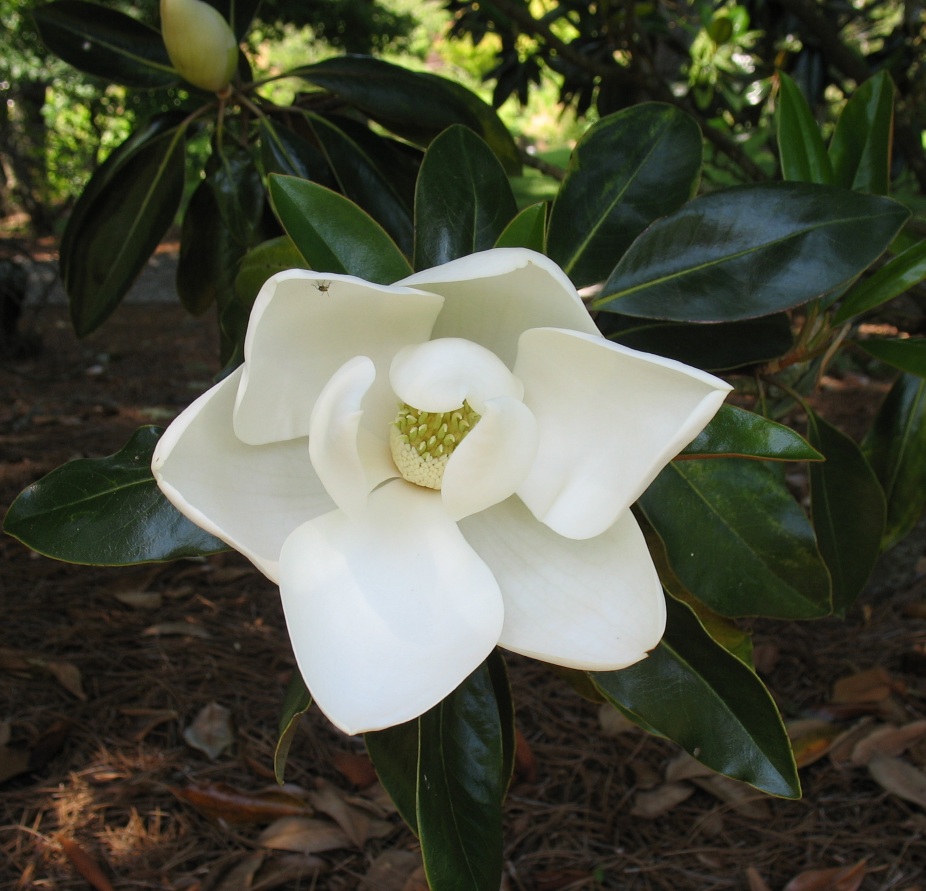
Magnolia grandiflora

Southern Magnolia (Magnolia grandiflora) is an example of a plant that is native to the southeastern United States but which is used in landscapes in whatever areas are warm enough to support it.  I was recently vacationing in the San Francisco area and found it used quite often there.


I recently read Timothy Spira’s book “Wildflowers and Plant Communities of the Southern Appalachian Mountains and Piedmont” and learned a lot about 21 different plant communities in this particular region (which includes Atlanta). I highly recommend the book and hope to present here some of the things that I learned from it. This is a recent book, published in early 2011.

The region covered in the book extends from northern Virginia, a sliver of West Virginia, a slightly larger sliver of Tennessee, most of North Carolina, South Carolina, the northern half of Georgia and a small area of east/central Alabama. The area known as the Coastal Plain (the eastern portions of Virginia, NC, SC and the southern half of Georgia in this case) is not included and has its own very unique and diverse plant communities.  This book covers the 21 major plant communities found in the southern Applachian mountain and piedmont regions of the southeastern United States.

Twenty-one sounds like a lot of unique communities, doesn’t it?  It can be a little simpler if I list the high level categories:

In the mountains there are 4 categories: High-elevation communities (6 of those), Low-elevation moist to wet communities (5), Low-elevation dry communities (2).  In the piedmont (the author reminds us that “piedmont” literally means “foot of the mountains” – I love that!) there 3 categories: Moist to wet communities (3), Dry communities (3), and Roadside and Field.

The book includes some beautiful pictures and in-depth plant profiles so that it also serves as a field guide.  Before one gets into descriptions of plants, however, the author lays the groundwork for understanding how these communities have come to be.  He provides good background on factors as far back as when and how the mountains formed as well as the role that climate played in altering habitats and allowing species to expand or contract their range.  More recent factors include the effects of human activities and invasive species.

This area of the United States is incredibly diverse – according to the author: “the southern Appalachians support more tree species than any other area of comparable size in North America”.  In general the area is considered to be a temperate deciduous forest – or would have been without human intervention.  There are some particular areas that are not a forest, and these areas serve to increase the diversity of the plants even more.

The picture here was taken on the Shirley Miller Wildflower Trail in the area known as The Pocket at Pigeon Mountain (Walker County, Georgia).  The trail winds through a rich cove forest community.

Ferns, Trillium and dwarf Iris cristata on the Shirley Miller Wildflower Trail


The details provided in the description of the region covered by the book are fascinating.  For example, the region has 3 national parks and 6 national forests; together these areas have the greatest concentration of public land in the eastern United States.  As you read more about the wonderful habitat these areas protect, one is grateful that these areas have been conserved.  However, as you may know, imported diseases have devastated many of the trees in the area: American chestnut (chestnut blight), Fraser fir (balsam woolly adelgid), and Canada and Carolina hemlocks (hemlock woolly adelgid) are once dominant tree species that have been or are in the process of being destroyed.  The plant communities with hemlocks (Tsuga spp.) are changing right before our eyes as the woolly adelgid spreads.  Our increased understanding of these communities affords us a chance to provide some measure of protection here and in yet unaffected areas as we recognize more the importance of conservation.

Ok, that pretty much covers Part 1 of the book.  The remaining parts are:

Part 2: a pictorial representation of each of the 21 communities.  These collections give you a preview of the plants you might find.  A sample group of plants is shown to represent each of the 21 communities:

Spruce-Fir Forest (Mountains)
Grassy Bald (Mountains)
Heath Bald (Mountains)
High-Elevation Rock Outcrop (Mountains)
High-Elevation Red Oak Forest (Mountains)
Northern Hardwood Forest (Mountains)
Rich Cove Forest (Mountains)
Acidic Cove Forest (Mountains)
Spray Cliff (Mountains)
Rocky Streamside (Mountains)
Mountain Bog (Mountains)
Chestnut Oak Forest (Mountains)
Pine-Oak-Heath (Mountains)
Forest Edge (Mountains)
River Bluff Forest (Piedmont)
Alluvial Forest (Piedmont)
Basic Mesic Forest (Piedmont)
Oak-Hickory Forest (Piedmont)
Xeric Hardpan Forest (Piedmont)
Granite Outcrop (Piedmont)
Roadside and Field (Piedmont)

The picture below is a "roadside and field" community near my house.  Roadsides can be tricky - sometimes they are full of invasive or naturalized plants - not natives much at all.  But this one is good: it has at least 3 different species of Eupatorium, at least 3 species of Goldenrod (Solidago), at least 3 species of grasses (and perhaps a couple of non-native ones), several different asters, blue curls (Trichostema dichotomum), and slender leaf false foxglove (Agalinis tenuifolia) - just discovered this morning! 


Part 3 provides detailed descriptions of each of the communities. These profiles include Distinguishing features, Vegetation overviews, Seasonal aspects, Distribution, Dynamics, Conservation aspects, Suggested reading references, and good lists of Trees, Shrubs, Herbaceous plants, and Rare plants.

Part 4 has detailed species profiles for the plants listed in Part 3. One feature that I particularly like is the “Ecology” section of the profile. This section provides some details not found in the usual plant guides.

The book finishes up with a Glossary, a list of recommended natural areas throughout the region (with descriptions of the exceptional features to be found in each), suggested books for further reading (which includes some of my favorites), an index of scientific names and a second index of common names.
 
The depth of information in this book is excellent, and it is presented at a level that can be used by all levels of naturalists.  Back to that Southern Magnolia - it's not listed in the book, by the way.  That plant is not indigenous (i.e., naturally found) in the Southern Appalachian Mountain or Piedmont communities.  You can expect to find it naturally in south Georgia - in the Coastal Plains communities.

LinkWithin

Related Posts Plugin for WordPress, Blogger...