6 Januari 2012

Transvaginal Mesh and Women’s Health

Please go to our new page for Transvaginal Mesh and More Updates

Rank 30 Jan, 2012 = 4/158,000

5 January, 2012  -  NEW ARTICLE


Our series on transvaginal mesh is now in PDF format, 26 pages.

19 December: High Costs Associated with Urogenital Surgery


Cost of surgery for certain urogenital conditions can range from $4000 to $6000 for your doctor with additional costs related to hospital care.


--------------------------------------------


C.R. Bard (NYSE:BCR) may have beaten The Street with its third-quarter results, but Wall Street investors are beating it back today, sending shares down nearly 4 percent.
The medical device maker reported its Q3 earnings and its $250 million acquisition of Medivance after the market closed yesterday. Bard posted profits of $130.1 million, or $1.46 per diluted share, on sales of $719.2 million for the three months ended Sept. 30.
That's 2.0 percent more profit and 6.0 percent more revenues than during the same period last year, when Murray Hill, N.J.-based Bard reported profits of $127.5 million, or $1.34 diluted EPS, on sales of $678.4 million.  October 26, 2011 by MassDevice


FDA Safety Communication: UPDATE on Serious Complications Associated with


 Transvaginal Placement of Surgical Mesh for Pelvic Organ Prolapse


Boston Scientific and other transvaginal mesh makers defend their devices amid FDA probe

Boston Scientific urges the FDA to maintain a class II device status on transvaginal mesh amid calls from public advocates for product recalls and FDA warnings that the devices may do more harm than good.

Johnson & Johnson vaginal mesh lawsuits another blow to the FDA's device review process

October 20, 2011 by Arezu Sarvestani

With high profile recalls in hip implants and defibrillators in the recent past, the FDA's medical device review process takes another hit it doesn't need as health care giant Johnson & Johnson weathers a storm of transvaginal mesh complaints.
 FDA's medical device review process is again under scrutiny as lawsuits pile up against health care leviathan Johnson & Johnson (NYSE:JNJ) for transvaginal mesh devices that may do more harm than good.

Lawsuits claiming negligence against mesh-makers have also implicated the FDA's review system for continuing to clear new mesh products under the 510(k) system, despite the predicate device being pulled from U.S. shelves.


Boston Scientific Corp.'s (NYSE:BSX) ProteGen mesh, cleared in 1996 and pulled from the shelves a year later, was used as a predicate device for clearing subsequent mesh products, despite more than 120 adverse event reports on the original design at the time, Bloomberg reported.

from Bloomberg By Alex Nussbaum and David Voreacos - Oct 20, 2011 J&J Vaginal Mesh Approved by FDA Based on Similar Device Recalled in 1999


More from the FDA

September 29, 2011
I am excited to report that I will be doing some follow up stories for an old friend, Eric Chaffin, of Chaffin Luhana LLP about prolapse and vaginal mesh complications. Eric is the one who originally approached me about doing the below vaginal mesh series a couple of years ago when he was with his old law firm. Eric and his now law partner, Roopal Luhana, have their own firm in NYC, Chaffin Luhana LLP. Eric and Roopal were some of the first attorneys in the country to represent women in the Bard Avaulta mesh litigation and in Gynecare mesh lawsuits. They continue to represent women in these medical device cases, as well as in other vaginal mesh litigations, including representing women in cases against Boston Scientific and American Medical Systems regarding allegedly defective vaginal mesh. You can learn more about the vaginal mesh cases Chaffin Luhana is handling through the vaginal mesh information website that Chaffin Luhana sponsors. I also hope that you will visit us soon here at Natural Health News to read the first of what I anticipate will be a multiple part follow up series regarding vaginal mesh.
Original and complete article from 2009 about TV Mesh Has Moved in order to bring you more updates on this important health issue.


UPDATE: 19 June, 2011


Several years ago I was commissioned by a consumer injury law firm to write a series of articles. One of those articles, http://naturalhealthnews.blogspot.com/2009/03/transvaginal-mesh-and-womens-health.html addressed issues with the transvaginal mesh device.  This article is also found on our other websites, simply4health.org and leaflady.org.


In the past several months I have noticed an increasing number of TV ads for this device from consumer injury law firms.  I have also noticed a viral spread of this article which has booted the reader ship of my blog, Natural Health News, by thousands of readers daily. 


This tells me that many women must be very interested in this topic, either because they have had this surgery and are facing problems, or they have been advised to have this operation.


Alternatives to the surgery are available options.  I hope to educate you about an important one that can do a great deal to prevent and correct this condition.

Should you wish a copy of this new article please email us and request it.  

Please consider a donation to help us continue this important work.

As originally written in 2009, in cooperation with Eric Chaffin, this article has created an internet storm -


Originally posted March 2009 -


Transvaginal Surgical Mesh Origins


Polypropylene was first developed in the 1950s as a thermoplastic polymer resin of propylene and is made from petroleum. Polypropylene may be molded or extruded into many forms, including fibers for suture material, specially produced mesh and nonwoven sheet applications. Nonwoven polypropylene fabric later began to be extruded from polymer melts rather than from fibers. 


New MESH page has the complete article and much more information.

Quaternary ammonium biocides are used as a disinfectant and germ killing substance because they disrupt the cell membrane and proteins. QUATS may not, however, be fully effective against Pseudomonas bacteria. Also, researchers have found in laboratory experiments that oleamide, which interacts with neurotransmitters, may leak out of polypropylene plastics.


Polypropylene Knitted Mesh (PPKM) fabrics are comprised of monofilament yarns, which are engineered for the manufacturing of textile fabrics. The polymer and manufacturing processes that are used produce fabrics with properties that are ideally suited for the manufacturing of medical device applications. Medical applications include hernia mesh patches, stress urinary incontinence (SUI) slings, and vaginal prolapse suspenders.

Nonwoven polypropylene fabric has been used for similar applications.

Problems with polypropylene fabrics have led to warnings being issued for various products made from nonwoven material and in some cases, the manufacturers have stopped marketing the products

According to adverse reports submitted to the FDA from nine different manufacturers, more than 1,000 people have suffered severe complications from surgical mesh implants. The reports include infection, pain, urinary problems and bowel, bladder or blood-vessel perforations. The repaired prolapse may have recurred or incontinence increased. Additional surgeries to remove mesh have been required because of vaginal erosion.

Transvaginal Surgical Mesh to Treat SUI

Sudden Urinary Incontinence (SUI) is estimated to affect as many as 11 million women in the United States. It is generally defined as the sudden, involuntary loss of urine when a patient is laughing, sneezing, coughing or exercising. SUI is caused by anything that may have led to serious pelvic muscle strain or weakness such as vaginal childbirth. It can be exacerbated by estrogen and other hormonal imbalance accompanying menopause.

Nearly 40% of all adult American women will experience various degrees of SUI during their lifetime. Symptoms can range from occasional leakage of a few drops of urine to complete loss of urine under certain conditions of stress. Although nonsurgical methods such as dietary changes, bladder retraining, Kegel exercises, biofeedback, pessaries, electrostimulation, and drug therapies have been used successfully to treat these women, many patients eventually require surgical repair to relieve their symptoms.

Historically, and for many decades, the Kelley plication or the Marshall-Marchetti (Krantz) procedures have been the main hospital based surgical treatments for reinforcing the bladder neck in order to prevent unintentional urine loss.

Other surgical techniques have been used to correct pelvic organ prolapse (POP), a related condition.

Transvaginal Surgical Mesh to Treat POP

The problem of incontinence for women from various causes becomes more common after pregnancy and in menopause, when surgery can be recommended after other non-intrusive treatments are not found effective.

These conditions are referred to as Pelvic Organ Prolapse(POP).

POP is the term that describes a condition when a pelvic organ drops from its normal location and pushes against the walls of the vagina. This generally occurs when muscles that hold pelvic organs in place are weakened or stretched by childbirth or surgery. POP can lead to symptoms that include pain, discomfort, loss of bladder control and constipation.

Mentor Sling

One popular product, known as the transobturator vaginal sling, was made by Mentor Corporation. This product was more commonly called “OB Tape.”

Mentor manufactured an OB Tape vaginal sling that was not recalled, but the company stopped marketing it in the spring of 2006. The product used a nonwoven material which made it different in design than most other mesh devices. The nonwoven fabric is alleged to have blocked oxygen and nutrients, substantially increasing the risk of problems such as infection. This impedance potentially can cause serious problems with the device that may not appear for months, or even years following implantation surgery.

The complication rate could very easily reach 20% of all patients who used the Mentor sling.

At least 35,000 women may have been treated with the OB Tape vaginal sling between 2003 and 2006 to treat female stress urinary incontinence (SUI). The bladder sling is designed to prevent involuntary leakage that occurs when pelvic muscles supporting the bladder and urethra are stressed or weakened. A number of women have filed Mentor sling lawsuits.

A study published in the Journal of Urology in October 2006 highlighted the risk of complications associated with the OB Tape sling. More than 13% of the women who received the Mentor Sling for incontinence allegedly have suffered vaginal extrusions. Many more cases reported women who suffered chronic vaginal discharge and abscesses.

Symptoms of OB Tape Sling injury may include but are not be limited to:

· High fever

· Vaginal Pain

· Pelvic Pain

· Pain During Sex

· Chronic Infections

· Perineal Cellulitis

· Severe Pain in the Back, Hips and Legs

If you have had this surgery and are experiencing any of these or other symptoms not listed here, immediately contact your health care provider.

If you have suffered an injury or Mentor sling side effects from surgery involving the use of a Mentor sling, and would like to learn about your legal rights and pursuing a Mentor sling lawsuit, you can find information at Consumer Injury Lawyers.

Other Transvaginal Surgical Meshes

Another product, Gynecare’s Prolift Sling, created serious problems that required additional surgery that has caused permanent injury. The Avaulta Bard surgical mesh, which is used to treat POP and SUI have also been the subject of Avaulta transvaginal mesh lawsuits. It has led some consumer advocates to call for an Avaulta transvaginal mesh recall.

If you have had a prolene mesh pelvic floor repair system and have suffered complications, you may have a viable product liability claim. In October 2008 the FDA transvaginal mesh alertwas issued for at least nine manufacturers of vaginal sling products.

Overall use of these surgical mesh products has been associated with severe and debilitating injuries including vaginal extrusions, urinary tract erosions, infection and nerve pain. Other known complications include, but are not limited to, mesh erosion, mesh shrinkage, granuloma from tissue injury or dyspareunia (pain with sexual relations).

Product and procedure failure with the tape sling products have required additional surgeries to remove the mesh, along with an increased risk of more injury.

If you have suffered an injury from any surgery involving the use of the surgical meshes referred to in the above article and would like to learn about your legal rights, you can find information from Consumer Injury Lawyers, a consumer advocacy legal website that provides helpful information to consumers about various drugs and medical devices, including for example information about the recent reports of zinc poisoning caused by denture cream, including information about denture cream lawsuits such as how to file a Fixodent lawsuit orPoligrip lawsuit.

This article is part of a consumer health education series written by Gayle Eversole, DHom, PhD, MH, NP, ND, of Creating Health Institute, in collaboration with Bernstein Liebhard, LLP.

The views expressed in this article are solely those of the author, Gayle Eversole.


4 Januari 2012

Home Made Rehydration Drink

I had a question from one of my readers about Pedialite. So I did a little searching to see what I could find. When I was a baby, and when I had my children, we never used Pedialite, instead we used a table spoon of Karo Corn Syrup in a bottle of water. But knowing now, what I know about corn syrup, that probably wasn't the best way to go - it works in a pinch though.

Pedialite and Gatorade are both full of chemicals, sugars and preservatives that you really don't want to give your infant. Plus, they are expensive! So home made options, where you can control the ingredients and their quality, are an obvious better option for most parents.

Here are some recipes I have found over the past few months. I will add more as I find them!


Recipe 1:
Ingredients:

  • 2 quarts water
  • 2 tablespoons sugar
  • 1 teaspoon baking soda
  • ½ teaspoon salt substitute (made with potassium chloride)
  • ½ teaspoon salt
  • 1 package "Invisible" Kool-Aid or other dye free flavoring (optional) 
    • OR 2 teaspoons vanilla (or other) extract

Preparation:
Mix all ingredients together and refrigerate. 

Recipe 2:
Ingredients:

  •  1 liter water
  • ½ cup Coconut Water
  • ½ teaspoon Salt 
  • 6-8 teaspoons of sugar
Mix all ingredients & cool.

Recipe 3: 
Ingredients:
  • 4 cups water
  • ¼ tsp real salt
  • ¼ tsp no salt (potassium chloride)
  • ¼ tsp baking soda
  • 2 ½ tsp sugar
Mix all ingredients & cool.

Recipe 4:  In case of diarrhea
Ingredients:
  • ½ to 1 cup precooked baby rice cereal or 1½ tablespoons of granulated sugar
  • 2 cups of water
  • ½ tsp. salt
Preparation:
Mix well the rice cereal (or sugar), water, and salt together until the mixture thickens but is not too thick to drink.

Give the mixture often by spoon and offer the child as much as he or she will accept (every minute if the child will take it).

Continue giving the mixture with the goal of replacing the fluid lost: one cup lost, give a cup. Even if the child is vomiting, the mixture can be offered in small amounts (2-1 tsp.) every few minutes or so.
  • Banana or other non-sweetened mashed fruit can help provide potassium.
     
  • Continue feeding children when they are sick and to continue breastfeeding if the child is being breastfed.

Additional Notes:
  • To much sugar can increase Diarrhea. So use the lowest amount that a child will take.
  • To much salt can increase Dehydration. Always test and make sure liquid is not as salty as tears.
  • You can not add to much water. If it seems to salty, add more water. 
  • Use "Salt Lite" rather than Salt as it includes potassium.

Natural Lubrication for Metal Implants


"Natural" graphite lubricant reduces wear on metal-on-metal implants

January 2, 2012 by Emily Greenhalgh

A newly discovered lubricating layer of graphite could be the key to longer-lasting metal-on-metal hip implants, according to researchers.

A study funded by the National Institutes of Health found that lubrication in metal-on-metal hip implants has more in common with the lubrication in a combustion engine than a natural joint.
The study, conducted by U.S. and German researchers, found that a lubrication layer that forms in metal-on-metal hip replacement devices is actually graphite carbon, not proteins as researchers previously suspected.
"Graphite has been used as a lubricant for over a century," study co-author Laurence Marks told Reuters. " It is a classic lubricant, and it appears to form naturally."
When they discovered the graphite lubricant, researchers from Northwestern, Rush University Medical Center and the University of Duisburg-Essen were analyzing 7 retrieved implants to find a way to stop erosion between their metal surfaces.
"This finding opens new avenues of investigation to help scientists understand how joint implants function, and to develop strategies to make them function better," Dr. Stephen Katz, director of the National Institute of Arthritis & Musculoskeletal & Skin Diseases, said in prepared remarks. "The results of such research could have important implications for several 100 thousand Americans who undergo hip replacement each year – as well as those who could benefit from the procedure, but have been advised by their doctors to delay surgery until they are older."
Hip replacements are one of the most common orthopedic surgeries in the U.S. More than 500,000 metal-on-metal implants have been performed so far, according to the FDA.
All-metal joints were designed to be more sturdy and accommodate larger femoral heads than the metal-polyethylene implants they replaced, but several studies found that patients who received the metal-on-metal implants were more likely to need repeat surgeries.
Due to the natural friction of the hip's movement, metal particles can wear off the implants and enter patients' bloodstreams, according to the federal watchdog agency.
"Problematic devices have tended to release more metal debris through wear and corrosion than devices that have performed well," lead investigator Dr. Joshua Jacobs said in prepared remarks. "This debris can cause a local tissue response involving the bone, ligaments, tendons and muscles around the hip."
Lawsuits over the implants have skyrocketed in recent months, topping 5,000 in 2011 – more than in the past 4 years combined.
The NIH researchers seemed optimistic about the lubricant discovery.
"Nowadays we can design new alloys to go in racing cars, so we should be able to do this for implants that go into human beings," Northwestern University professor Laurence Marks said in a prepared statement.
If the research doesn't pan out, growing concern could put the devices on track to be the biggest and most expensive medical implant quagmire since Medtronic (NYSE: MDT) recalled its Sprint Fidelis lead in 2007.
And the high-profile recall of Johnson & Johnson (NYSE:JNJ) subsidiary DePuy Orthopaedics' metal-on-metal ASR implant could cost $1 billion on its own.
All-metal joint replacements haven't just been a target for the federal watchdog agency. The implant woes have garnered the attention of lawmakers as well.
Three U.S. senators are calling for increased safety measures for medical devices, spurred by the attention given to the recalls. Their proposed legislation would beef up the FDA's safety regulations, allowing the federal watchdog agency to conduct safety studies of devices after they've been approved and to grant conditional approvals contingent on further trials.

SOURCE: http://www.massdevice.com/news/natural-graphite-lubricant-reduces-wear-metal-metal-implants


From Natural Health News

Aug 23, 2011 Hip Implant Complaints Surge, Even as the Dangers Are Studied. Originally posted 2009. Total Hip Arthroplasty Every year approximately 200000 hip replacement surgeries are performed in the United States and the success ...

3 Januari 2012

Kidney Bean Salad with Mediterranean Dressing

Prep and Cook Time: 15 minutes

Salad Ingredients:
1 ear of raw corn kernels
1/4 cup minced red onion
1 15oz can kidney beans, rinsed and drained
1 medium tomato, chopped
2 TBS fresh parsley or cilantro, minced

Mediterranean Dressing Ingredients:
4-5 cloves garlic, chopped or pressed
1 cup extra virgin olive oil
1/3 cup fresh lemon juice
sea salt and pepper to taste
Directions:
Combine all ingredients and toss with 1/2 cup Mediterranean Dressing.
Mediterranean Dressing Directions:
Press garlic and let it sit for 5 minutes.
Whisk together the lemon juice, garlic, sea salt, and pepper.
Slowly pour the extra virgin olive oil into the mixture while whisking constantly. The more slowly you pour and the faster you whisk, the thicker and creamier the dressing will be.
The dressing will store in the refrigerator for up to 10 days. It will solidify so you will need to bring it back to room temperature before using.
Recipe By:  Tea Perron
Taken From "The Good Witch's Farm House Kitchen Facebook Page"

Recipe: Hot Onion Souffle


Happy New Year's everyone!! I have emerged from my Holiday cocoon rested and relaxed and maybe even ready to tackle this new year. We put our time off to good use. We hosted my folks, cleaned out the house, cooked with abandon and actually beat the now "old-timey" game Legend of Zelda on our Wii. Okay, DH beat Legend of Zelda and Thing 1 and I contributed in small ways and by cheering. But all of us, including Thing 2, enjoyed watching it go down.

But wait...in my last post over two weeks ago I promised THE PERFECT holiday dip! And I never followed up with a recipe! Oh the injustice. I suppose that I am exactly what I always have promised I would be-inconsistent at best. But...we did host a fantastic New Year's Eve party and I do make this dip whenever we are getting together with people that we want to impress so I thought it would be wrong of me not to share the recipe with you.

I always get lots of oohs and aahs when I serve this dish. But it is rich and I have decided that high fat diet or no high fat diet, this dip is not good for you. It is doing you no favors on the waistline or anywhere else for that matter. Don't try and kid yourself that this dip is high in whatever vitamin or antioxidant that onions posses. This dip is purely for pleasure.

I got this recipe from my sister in law. But I am fairly certain that she got it from some southern Junior League cookbook. But in just one google search I found a few claiming the recipe as their own. I add that just so you know I am not trying to selfishly claim this as my own. I did not invent this mash of amazingness.

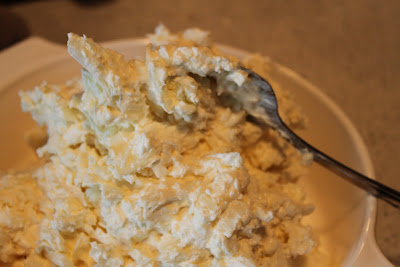
Hot Onion Souffle

2 Packages cream cheese (I love Organic Valley's), at or near room temperature
1/2 cup mayo
1 large sweet onion, finely minced
1 cup shredded Parmesan

Mix ingredients.

Spread in a dish.

Bake at 350 degrees until the top begins to brown at the edges. Do not over bake or the dip will begin to separate and get oily. I have done that, not good. Serve with crackers or if you dare, Fritos.


This is so good that it might actually be worth the extra pant size. Happy New Year people! I am happy to be back in the blogging saddle. I look forward to a new year full of new posts!!

Enjoy!!

Avoid Toxic Sweeteners for Weight Loss Goals

Aspartame Warning Flyer for distribution: http://www.mpwhi.com/warning_flyer_on_aspartame.htm

The Lethal Science of Splenda: http://www.wnho.net/splenda_chlorocarbon.htm

Studies have shown that sucralose can:

* Cause the thymus to shrink by as much as 40% (the thymus is your immune powerhouse - it produces T cells)
* Cause enlargement of the liver and kidneys
* Reduce growth rate as much as 20%
* Cause enlargement of the large bowel area
* Reduce the amount of good bacteria in the intestines by 50%
* Increase the pH level in the intestines (a risk factor for colon cancer)
* Contribute to weight gain
* Cause aborted pregnancy low fetal body weight
* Reduce red blood cell count

Particular warning to diabetics: Researchers found that diabetic patients using sucralose showed a statistically significant increase in glycosylated hemoglobin, a marker that is used to assess glycemic control in diabetic patients. According to the FDA, "increases in glycosolation in hemoglobin imply lessening of control of diabetes."

Here is how Splenda is made: http://www.wnho.net/chemical_processing_of_splenda.htm

Ajinomoto just announced a new name for aspartame called AminoSweet. Be warned. It goes under many names; NutraSweet, Equal, Spoonful, Naturataste, Canderel, Benevia, E951, etc. Because the patent has expired it can be used in anything. You must read labels. Many times it’s hidden in artificial and natural flavors. Remember that aspartame has a synergistic and additive effect with MSG. Stuart Pape of the National Yogurt Assn has petitioned the FDA to allow aspartame unlabeled in yogurt and dairy products.


Special warning for diabetics: Aspartame can precipitate diabetes, simulates and aggravates diabetic retinopathy and neuropathy, destroys the optic nerve, causes diabetics to go into convulsions, and even interacts with insulin. The free methyl alcohol causes diabetics to lose limbs. Jeanette Soto, Mission Possible Brookville, Fla, who wrote “Blinded Sight” when her husband lost his sight from aspartame was unable to get her father-in-law, diabetic off aspartame because of the addiction. The free methyl alcohol is classified as a narcotic. It causes chronic methanol poisoning which affects the dopamine system of the brain and causes the addiction. When Jeanette’s father-in-law, Santiago Echiverria died it had to be a closed casket, the formaldehyde from the free methyl alcohol was oozing out of his skin. The American Diabetes Assn was sued in 2004 for racketeering for pushing aspartame on diabetics, but because of their power got out of it.

Today people are dying of the methanol poisoning. Dr. James Bowen explains:
"Only after longer aspartame usage does liver damage cause blood methanol levels to measurably rise because the liver mitochondria are so damaged that the liver no longer quickly processes either methyl or ethyl (drink) alcohol. Then the acute methanol poisoning is directly measurable from lab results, as the blood methanol level elevates. This entire sequence or "toxic axis" begins with your very first dose of aspartame. Both acute and chronic poisonings from this methanol toxic axis, and other additive and synergistic aspartame poisonings, steadily accumulate in the aspartame consumer.” We continue to get reports of people dying of methanol poisoning. Charles Fleming died and his wife, a Sunday School teacher, remains in a prison in Virginia. The detective on the case said, “Diane is innocent but because I was promoted I could not stop the indictment.” Be warned no diabetic should ever consume wood alcohol. The FDA did no NOAEL on methanol. Without it you cannot set an ADI, allowable daily intake. It’s 44% too high.


Just Like Sugar is a safe natural sweetener, see link in right column.

1 Januari 2012

Birds Love a Thicket

I walked past a grassy strip the other day and a flock of small birds rose up from where they had been feeding on small seeds and insects.  Anxious to escape whatever harm might befall them, they headed for a nearby thicket of dense shrubs.  The twiggy growth of the thicket was the perfect protection from any dog, cat or large bird that might have been chasing them.  Nature has always created such thickets - perhaps it is time that we consider how they might be part of our own landscape plan.

Cardinal in shrubbery - looks like he feels safe!

R K Young at Native Backyard recently shared an article from Audubon magazine about supporting birds that migrate. It's an excellent article, and I encourage you to read it and share it with others.  One point the author makes is how the different migrating birds rely on various vertical layers in the wild.  However, one layer is often missing in suburban landscapes:  the layer composed of shrubs and small trees.  The article recommends that we: "Fill in the gaps with shrubs, the more different types the better. Many migrants are attracted to thickets, dense masses of fruiting shrubs, vines, briers, and brambles."

Sparkleberry (Vaccinium arboreum) with grape vine and fence
makes for a good hedge


A hedge (or hedgerow) might be another way to consider the concept of a thicket.  Hedges are typically a densely grouped area of medium to large-sized shrubs.  While many people use them for privacy or to define a property boundary, they can also be used to create rooms within a large garden space or, in this case, provide a place for shelter for small birds.  I have some evergreen shrubs near my birdbath and the birds often land there first to make sure the area is clear of predators before flying in to get a drink or a bath.

Once you decide on a purpose for your thicket (privacy, boundary, or just for wildlife?) and a location for it in your yard, it’s time to consider what plants could be used to construct it.  Consider the following points:

-          Height: Does the planting need to be kept to a certain height or can you accommodate a variety of heights in the group?  If there is a certain height, be sure to consider the mature height of the chosen plants so that you are not required to prune to stay within that height.  Well, unless you LIKE to prune, of course.

-          Light exposure: How much sun does the area receive?  If more than 6 hours per day or if it is in the hot afternoon summer sun, then full sun plants should be chosen.

-          Appearance: What is the desired overall look?  Use all one type of plant for a more formal look, or use a mixture of plants for an informal look (or especially if you have a hard time choosing just one type of plant!). Evergreen or deciduous?  Personally, I prefer a mixture – deciduous plants tend to give you more blooms but evergreen plants will give you some year round greenery.


Once you’ve answered those questions for yourself, you can make your choices. Dense, twiggy shrubs are the best - if the limbs have small thorns, all the better. Such plants allow small birds to fly in while making it more difficult for large predators to follow. You can improve the denseness by selective pruning. You may have noticed before that when you prune a twig, new growth is often produces in multiple shoots. That is, for each cut, 2 or 3 new shoots appear. 

Here are some ideas for evergreen plants that might be used for hedges/thickets in north Georgia:

Hobblebush (Agarista populifolia, used to be Leucothoe populifolia), 8-12 feet
Doghobble (Leucothoe fontanesiana), up to 5 feet (L. axillaris is similar)
Inkberry (Ilex glabra) - can handle moist conditions
Florida Anise (Illicium floridanum) – part shade; I. parviflorum is bigger and more sun tolerant.
Rhododendron maximum or R. catawbiense - need afternoon shade
Mountain laurel (Kalmia latifolia) - afternoon shade
Eastern redcedar (Juniperus virginiana), over 30 feet
Wax myrtle (Morella cerifera, used to be Myrica cerifera), 15-20 feet
Yaupon holly (Ilex vomitoria), 15-20 feet

Mountain laurel (Kalmia latifolia) mixed with small trees

Dwarf forms of some of the above:

Agarista populifolia ‘Leprechaun’
Ilex glabra ‘Compacta’ up to 6 feet
Ilex glabra ‘Shamrock’, slowly growing to 5 feet
Morella cerifera ‘Don’s Dwarf’, ‘Fairfax’, both up to 6 feet
Morella cerifera ‘Suwanee Elf’,  up to 4 feet
Kalmia latifolia ‘Elf’, ‘Minuet’ and others
Ilex vomitoria ‘Nana’ (male plant, no berries)
Ilex vomitoria ‘Schillings Dwarf’ or ‘Stokes dwarf’

Here are some ideas for deciduous plants that might be used:

Hawthorns (Crataegus spp.) - small to medium tree to anchor the hedge
Serviceberry (Amelanchier spp.) - small to medium tree, 15-30 feet if A. arborea
Sparkleberry (Vaccinium arboreum)  – large shrub, small tree, up to 12 feet (slowly)
Viburnums (especially V. prunifolium and V. rufidulum), up to 12 feet (slowly)
Winterberry (Ilex verticillata) - good in a moist area
Fothergilla (Fothergilla major or F. gardenii)
Summersweet (Clethra alnifolia) - good in a moist area, use cultivar 'Hummingbird' for low growth

Passiflora incarnata

Remember that a variety of plants will support more wildlife through diversity.  Also, consider adding a vine or two to increase the complexity of the thicket: a fast and showy grower would be Passionflower (Passiflora incarnata); the native Honeysuckle (Lonicera sempervirens) would add some bright color in a sunny hedge; and one of the leatherflower Clematis (Clematis viorna perhaps) would have unusual blooms and seedheads. 

Remember that many of these plants are host plants for certain insects (which the birds eat) and many of these plants have berries or seeds that the birds eat.  You can't help but benefit the birds in several ways with most of these choices.

LinkWithin

Related Posts Plugin for WordPress, Blogger...